
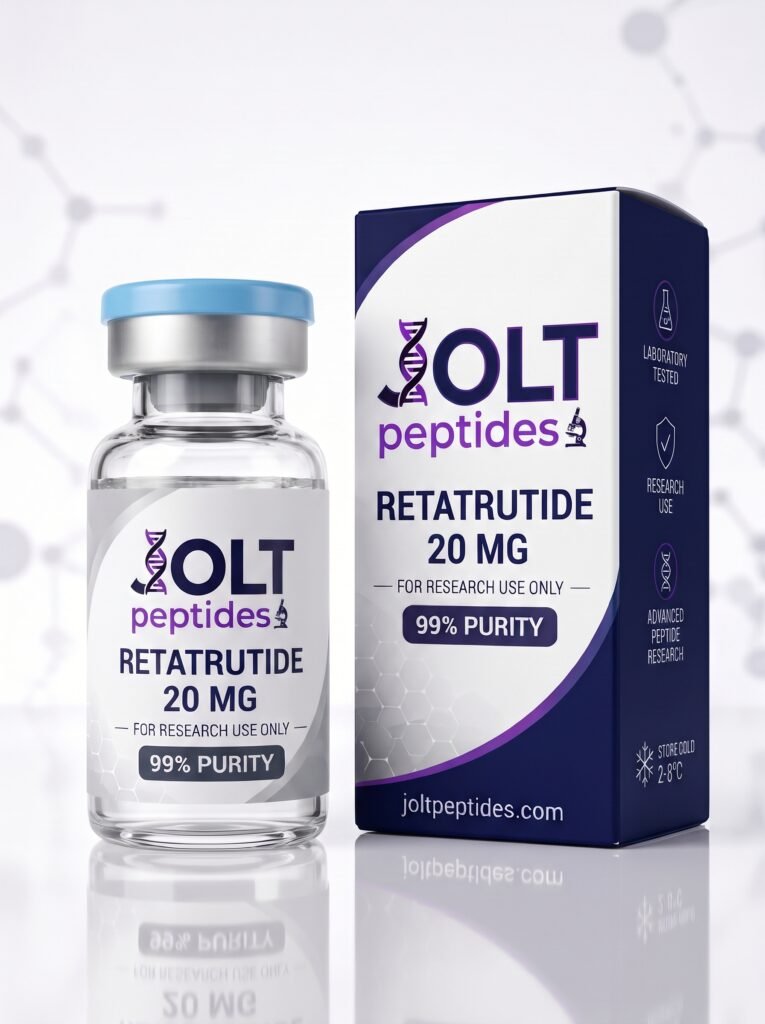
Retatrutide 20 mg
GIP, GLP-1 and glucagon receptor triple agonist · LY3437943
In stock · ships within 24 hResearch areas
- Body weight and obesity
- Type 2 diabetes and HbA1c
- Liver fat (MASLD)
- Energy expenditure
- Once-weekly dosing in trials
Topics of published studies (cell, animal and clinical). These are not claims about effects in humans; the product is intended solely for research. You will find the sources below.
What the trials showed- Content
- 20 mg
- Receptors
- GIP · GLP-1 · GCG
- Mol. weight
- 4,731.4
- CAS
- 2381089-83-2
 Z-Box, pick-up point or home delivery
- Ships from the Netherlands within 24 hours
- Free shipping over €100
- Discreet packaging
Main research areas
- Body weight: In a 48-week phase 2 trial, mean weight fell by up to 24.2%.
- Glucose control: Studied in type 2 diabetes for HbA1c and insulin secretion.
- Liver fat: Marked reduction of liver fat in the MASLD substudy.
- Energy expenditure: The glucagon receptor adds an effect on fat burning and the liver.
- Pharmacology: Half-life of about 6 days, given once weekly in trials.
Stock solution and trial doses
Preparing a stock solution
The vial contains 20 mg. Dissolving it in 2.0 ml of bacteriostatic water gives a stock solution of 10 mg/ml, i.e. 1 mg in every 0.1 ml. Add the solvent slowly down the inside wall of the vial and let it dissolve with gentle swirling, not shaking. Label the vial with the concentration and date and keep it at 2–8 °C.
Weekly doses in published trials
Trials started low and raised the dose every 4 weeks to reduce gastrointestinal side effects. The volumes below correspond to a 10 mg/ml solution.
| Weeks | Phase 2 (NEJM 2023) | Phase 3 (TRIUMPH) |
|---|---|---|
| 1–4 | 2 mg · 0.2 ml | 2 mg · 0.2 ml |
| 5–8 | 4 mg · 0.4 ml | 4 mg · 0.4 ml |
| 9–12 | 8 mg · 0.8 ml | 6 mg · 0.6 ml |
| 13–16 | 12 mg · 1.2 ml | 9 mg · 0.9 ml |
| 17+ | 12 mg · 1.2 ml | 12 mg · 1.2 ml |
Lower target groups (1, 4, 8 or 9 mg) stopped escalating at their assigned dose. These are published study protocols, not dosing recommendations. The reconstitution calculator converts other volumes.
Side effects and research notes
- Retatrutide is not an approved medicinal product; phase 3 trials are ongoing.
- The most common adverse events in trials were gastrointestinal – nausea, diarrhoea, vomiting and constipation – mostly mild to moderate and during dose escalation.
- Starting at 2 mg instead of 4 mg reduced these effects in the phase 2 trial.
- Heart rate rose in a dose-dependent way, peaked around week 24 and then declined.
- Long-term safety data are still limited.
Retatrutide (development code LY3437943) is a single 39-amino-acid peptide that switches on three hormone receptors at once: GIP, GLP-1 and glucagon. That makes it the first "triple agonist" to reach large phase 3 trials – and the reason it is often nicknamed "GLP-3". In the 48-week phase 2 obesity trial, the highest dose group lost on average 24.2% of body weight, the largest result reported for an incretin-based peptide at that stage.[1][2]
How Retatrutide works: three receptors in one molecule
GLP-1 and GIP are incretins – gut hormones released after a meal that boost glucose-dependent insulin secretion and signal fullness to the brain. Glucagon, usually known for raising blood sugar, also increases energy expenditure and fat breakdown in the liver. Retatrutide was designed to combine all three signals in a balanced way: in laboratory assays it is more potent than natural GIP at the GIP receptor and somewhat weaker than the native hormones at the GLP-1 and glucagon receptors.[1] A C20 fatty diacid attached to the chain binds blood albumin, which slows clearance to a half-life of about six days – long enough for once-weekly dosing in trials.[3]
| Peptide | Receptors | Status |
|---|---|---|
| Semaglutide | GLP-1 | Approved medicine |
| Tirzepatide | GIP + GLP-1 | Approved medicine |
| Retatrutide | GIP + GLP-1 + glucagon | Phase 3 trials |
Clinical trial results
The research programme moved quickly from the 2022 discovery paper to large human studies. The graphic above shows the dose-dependent weight change from the phase 2 obesity trial; the table summarises the main published studies.
| Study | Population | Key finding |
|---|---|---|
| Phase 1b, 12 weeks | Type 2 diabetes | Half-life of about 6 days; dose-dependent fall in glucose and body weight[3] |
| Phase 2, 48 weeks | 338 adults with obesity or overweight | Mean weight change −24.2% at 12 mg vs −2.1% with placebo[2] |
| Phase 2, 36 weeks | 281 adults with type 2 diabetes | HbA1c down by up to about 2 percentage points, weight by up to about 17%[4] |
| Phase 2a liver substudy | Obesity with liver fat (MASLD) | Liver fat reduced by more than 80% at the higher doses[5] |
| Phase 3 TRIUMPH / TRANSCEND | Obesity, type 2 diabetes and related conditions | Ongoing; first results reported from 2025 |
Why the glucagon component matters
Adding glucagon to an incretin agonist is a deliberate trade-off. On its own glucagon raises blood glucose, but combined with GLP-1 and GIP its effect on the liver and on energy expenditure comes to the fore. In the liver substudy, fat content fell so far that most participants on the higher doses dropped below the 5% threshold considered normal.[5] That is why Retatrutide is studied not only for weight but also for metabolic liver disease.
Retatrutide 20 mg: preparation and availability
The vial contains 20 mg of lyophilized peptide. Adding 2.0 ml of bacteriostatic water gives a 10 mg/ml solution, so 0.1 ml contains 1 mg. You will find the escalation schedules used in published trials in the Stock solution and trial doses section, and the reconstitution calculator does the conversions for other volumes. For a full overview of the science, read our article What is Retatrutide? The triple agonist explained. For comparative research we also stock Tirzepatide 30 mg.
Retatrutide is not an approved medicine. The product is intended solely for laboratory research, not for use in humans or animals.
Questions about Retatrutide
What is Retatrutide?
Retatrutide (LY3437943) is a synthetic peptide of 39 amino acids developed by Eli Lilly. A single molecule activates three receptors – GIP, GLP-1 and glucagon – which is why it is called a triple agonist or, informally, “GLP-3”.
How does Retatrutide differ from Tirzepatide and Semaglutide?
Semaglutide acts on the GLP-1 receptor only and Tirzepatide on GIP and GLP-1. Retatrutide adds the glucagon receptor, which in studies is linked to higher energy expenditure and fat breakdown in the liver.
What did the phase 2 obesity trial show?
In a 48-week trial of 338 adults with obesity or overweight, mean body weight fell by 24.2% in the 12 mg group, compared with 2.1% with placebo (Jastreboff et al., NEJM 2023).
How do I prepare a Retatrutide 20 mg solution?
Adding 2.0 ml of bacteriostatic water to the 20 mg vial gives a 10 mg/ml solution, so 0.1 ml contains 1 mg. The peptide calculator works out other volumes.
Is Retatrutide an approved medicine?
No. It is still in phase 3 clinical trials (the TRIUMPH and TRANSCEND programmes) and is not approved by the EMA or the FDA. We sell it solely for laboratory research.
How should Retatrutide be stored?
Keep the lyophilized powder dry and dark, long term in a freezer at −20 °C. After reconstitution, keep the solution in the fridge at 2–8 °C and avoid repeated freezing and thawing.
We will publish the Retatrutide certificate of analysis with the first batch
We send every new batch for independent testing. As soon as Retatrutide 20 mg is in stock, you will find the lab report here with the purity, identity and vial content results – just like for our other products on the peptide test results page.
Laboratories we work with: Janoshik Analytical, Finnrick and LiquiLabs.
- Purity (HPLC)Share of Retatrutide in the powderawaiting batch
- Identity (MS)Mass 4,731.4 g/molawaiting batch
- Vial contentDeclared 20 mgawaiting batch
Molecular profile – sequence
Y-Aib-QGTFTSDYSI-αMeL-LDK-K(γGlu-2xOEG-C20 diacid)-AQ-Aib-AFIEYLLEGGPSSGAPPPS-NH₂
Molecular weight
- 4731.4 g/mol
CAS number
- 2381089-83-2
Molecular formula
- C221H342N46O68
Material data
Appearance
White to off-white lyophilized powder
Solubility
Soluble in bacteriostatic water and suitable aqueous laboratory solvents.
Product note: GIP / GLP-1 / glucagon receptor triple agonist (LY3437943, 39 amino acids); supplied solely for research purposes.
Peptides in transit
We ship lyophilized peptides in glass vials by standard shipping; they do not need refrigeration. Short temperature fluctuations in transit do not reduce their quality, and the lyophilized form stays stable for several weeks even in summer temperatures.
Storing lyophilized peptides
Store lyophilized peptides in a dry place, protected from light and moisture. We generally recommend these conditions:
- Room temperature (15–25 °C): up to 3 months
- In the fridge (2–8 °C): up to 6 months
- In the freezer (−20 °C and below): 3–5 years (recommended for long-term storage)
After taking the vial out of the fridge or freezer, let it warm to room temperature.
Storing reconstituted peptides
Peptide solutions are generally less stable after reconstitution than the lyophilized form, so keep them cold whenever possible. We generally recommend these conditions:
- Room temperature (15–25 °C): not recommended long term
- In the fridge (2–8 °C): usually 4–8 weeks
- In the freezer (−20 °C and below): up to 3–4 months
To keep the peptide intact, avoid repeated freezing and thawing, which can speed up its degradation.
Important:
Most manufacturers recommend using reconstituted peptides stored at 2–8 °C within 4 weeks. This recommendation is deliberately cautious and may not reflect the actual chemical stability of every peptide. Actual stability depends strongly on the sequence and formulation of the specific peptide, so stick to the recommended period and keep the solution cold and dark.
Scientific sources and citations will appear here.
The research overview is based on scientific literature



Customer reviews
Browse more products
Other research peptides and our best sellers in stock.
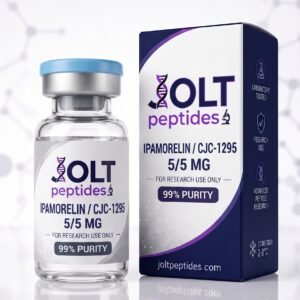
CJC-1295 (no DAC) + Ipamorelin 5 mg + 5 mg
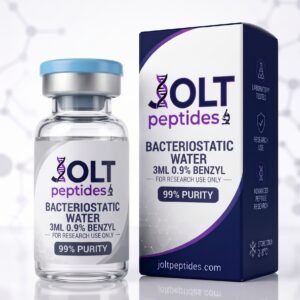
Bacteriostatic water 3 ml
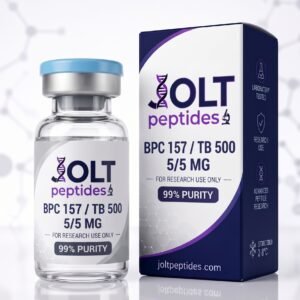
BPC-157 + TB-500 5 mg + 5 mg
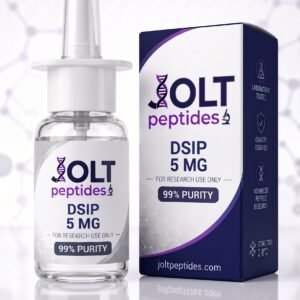
DSIP 5 mg
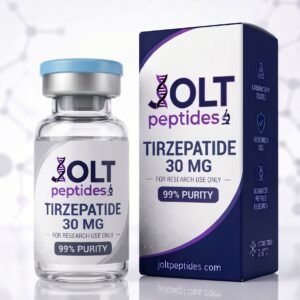
Tirzepatide 30 mg
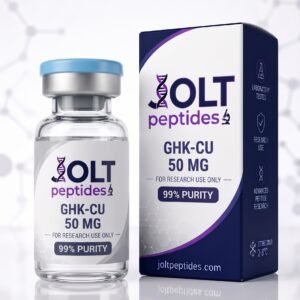
GHK-Cu 50 mg
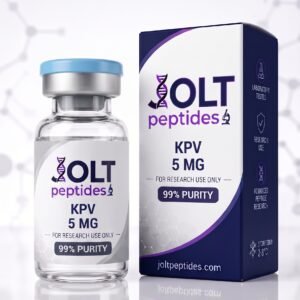
KPV 5 mg
NAD+ 500 mg
Pinealon 10 mg
Selank 5 mg
Retatrutide 20 mg is intended solely for in vitro research and laboratory use. The information on this page summarises published studies and is not medical advice.
Be the first to review “Retatrutide 20 mg”