GHK-Cu 50 mg
Copper tripeptide Gly-His-Lys · found naturally in human blood
In stock · ships within 24 hResearch areas
- Collagen synthesis
- Wound healing
- Cosmetic skin studies
- Hair follicles
- Antioxidant activity
Topics of published studies (cell, animal and clinical). These are not claims about effects in humans; the product is intended solely for research. You will find the sources below.
The full story of the copper peptide- Content
- 50 mg
- Colour
- blue powder
- Mol. weight
- 401.9
- CAS
- 89030-95-5
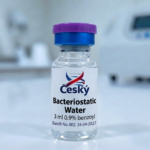
 Z-Box, pick-up point or home delivery
- Ships from the Czech Republic within 24 hours
- Free shipping over CZK 3,000
- Discreet packaging
Main research areas
- Collagen and elastin: In fibroblast cultures it increased the production of collagen and of substances that give skin firmness.
- Wound healing: Studied for faster wound closure and new blood vessel formation.
- Hair: Studied for its effect on hair follicle size.
- Antioxidant protection: Protects cells from oxidative stress in cell models.
- Gene expression: Shifts the activity of thousands of genes towards tissue repair.
Preparing a stock solution
Preparing a stock solution
The vial contains 50 mg. Dissolving it in 3.0 ml of solvent gives a stock solution with a concentration of 16.7 mg/ml, i.e. 16.7 µg in every microlitre. In the laboratory the solvent used is sterile or bacteriostatic water, or a buffer according to the method. Add the solvent slowly down the inside wall of the vial and let the contents dissolve with gentle swirling, not shaking – shaking can damage the peptide. The copper complex solution is blue; turning green signals that the complex is breaking down. Divide the stock solution into aliquots and freeze them; repeated thawing reduces the content. The reconstitution calculator works out conversions for other volumes and dilutions using C1V1 = C2V2.
Limitations and research notes
- GHK-Cu is not a registered medicinal product.
- Human data come mainly from studies with topical cosmetic products.
- The solution changes colour from blue to green if the copper complex breaks down.
- At higher concentrations it leaves a bluish stain on materials.
The peptide that carries copper in the body
GHK-Cu is a small glycine–histidine–lysine tripeptide that binds a copper ion tightly. It was discovered in human blood in 1973 by Loren Pickart, who noticed that plasma from young people could “rejuvenate” liver cells from older donors.[1] Since then the copper peptide GHK-Cu has been one of the most studied substances in dermatological and cosmetic research.
What is interesting is how its levels change with age: at twenty, blood plasma contains around 200 ng/ml; at sixty, only about 80 ng/ml.[3] This decline is one of the reasons the copper tripeptide is studied in connection with skin and tissue ageing.
What GHK-Cu does in the skin
A key study by Maquart et al. (1988) showed that in cultures of fibroblasts – the cells that produce connective tissue – this complex increases the production of collagen.[2] Follow-up work described effects on elastin, decorin and glycosaminoglycans too, the substances that give skin firmness, elasticity and hydration. At the same time it supports the breakdown of damaged collagen – so the tissue is not only “built” but also remodelled.[4]
| Area | What studies look at | Type of research |
|---|---|---|
| Collagen and elastin | Formation and remodelling of connective tissue | Cell cultures, skin |
| Wound healing | Speed of wound closure, blood vessel formation | Animal models |
| Hair follicles | Follicle size and hair growth | Cell and cosmetic studies |
| Oxidative stress | Protecting cells from free radicals | Cell models |
| Gene expression | Change in the activity of thousands of genes | Gene data analysis |
Copper as a tool for enzymes
Copper itself is both necessary and dangerous for cells: some key enzymes do not work without it, but free copper damages tissue. The tripeptide acts as a safe “carrier” – it holds copper tightly and delivers it where it is needed. It is used, for example, by lysyl oxidase, the enzyme that cross-links collagen and elastin fibres into a strong network, and by superoxide dismutase, one of the body's main antioxidant enzymes.[3][4] That is also why the complex's effects in the skin and in defence against oxidative stress overlap so often.
Wound healing and hair follicles
In animal models the copper complex sped up wound closure, supported the formation of new blood vessels and attracted immune cells to the wound that clear away damaged tissue.[4] Cosmetic and cell studies also describe enlargement of hair follicles – which is why the substance also appears in hair-growth research. Human results come mainly from studies with creams and serums, not the injectable form.
Thousands of genes at once
Analyses of gene data suggest that GHK influences the activity of thousands of human genes – shifting many of them in a direction that matches a “younger” cell profile: more genes linked to tissue repair and antioxidant protection, fewer genes linked to inflammation.[5] A review by Pickart & Margolina (2018) uses this to explain why a single tripeptide has such a broad reach – from the skin and lungs to nerve cells.
Why the powder is blue
Unlike most peptides, the lyophilized powder is not white but blue to blue-green. The colour comes from the bound copper in the Cu²⁺ oxidation state – just like in copper sulphate. The blue colour is therefore a sign that the vial really contains the peptide as a copper complex. After reconstitution the solution is light blue and clear.
GHK-Cu peptide in cosmetics and in the laboratory
In cosmetics GHK-Cu is used in creams and serums, where it acts only in the upper layers of the skin. In research, the lyophilized GHK-Cu peptide is dissolved and its systemic effects are studied – on healing, hair follicles and oxidative stress.[3][4] We write about the mechanisms in more detail in the article GHK-Cu: the copper peptide and its effects.
Reconstituting GHK-Cu 50 mg
The vial contains 50 mg – much more than typical peptides – so the concentration comes out high: about 16.7 mg/ml after adding 3.0 ml of bacteriostatic water. You will find the conditions of published studies in the Solution preparation and published studies section, and the reconstitution calculator works out the concentration.
GHK-Cu 50 mg with a lab report
The batch has a published report from an independent laboratory and a safety data sheet – you will find them in the Tests and certificates tab and on the peptide test results page. We ship from the Czech Republic within 24 hours; delivery across Czechia and Slovakia takes 3–5 days.
Most GHK-Cu data come from cell and animal models and cosmetic studies. The product is intended solely for research.
Most common questions about GHK-Cu
What is GHK-Cu?
A glycine–histidine–lysine tripeptide with a bound copper ion. It occurs naturally in human blood, saliva and urine, and its level falls with age – from about 200 ng/ml at age 20 to roughly 80 ng/ml at age 60.
Why is GHK-Cu blue?
The blue colour comes from the bound Cu²⁺ copper. A blue to blue-green powder is therefore a sign that the vial contains the real copper complex, not the GHK peptide on its own.
What is the difference between GHK-Cu in a cream and in a vial?
Cosmetic creams only act in the upper layers of the skin. Lyophilized GHK-Cu is dissolved in bacteriostatic water and used in research to study systemic effects – on healing, hair follicles or oxidative stress.
How many mg does a vial contain and how do I prepare it?
The vial contains 50 mg. Adding 3.0 ml of bacteriostatic water gives a solution of about 16.7 mg/ml. The peptide calculator does the conversion for other volumes.
Can GHK-Cu be combined with other peptides?
In regeneration research it is often studied together with BPC-157 and TB-500, which work through different mechanisms – blood vessel formation and cell migration.
How should GHK-Cu be stored?
Keep the lyophilized powder in a freezer at −20 °C, protected from light. After reconstitution, keep it in the fridge at 2–8 °C.
Certificate of analysis (COA)
Independent verification of identity and purity by HPLC. Sample tested:
- GHK-Cu 50 mg (batch MJUQRJ5)Finnrick (analysis by Krause Analytical) · December 30, 2025HPLC purity > 99.95 % · measured 50.9 mg (101.7 % of declared)Verification: finnrick.com/verify
Safety data sheet (SDS)
Hazards, handling, storage and disposal of the substance.
Open the safety data sheetMolecular profile – sequence
Gly-His-Lys
Molecular weight
- 401.91 g/mol
CAS number
- 89030-95-5
Molecular formula
- C14H22CuN6O4
Material data
Appearance
Blue to blue-green lyophilized powder
Salt form: GHK–Cu(II) complex 1:1
Solubility
Soluble in bacteriostatic water and suitable aqueous laboratory solvents.
Product note: Copper-binding tripeptide complex; supplied solely for research purposes.
Peptides in transit
We ship lyophilized peptides in glass vials by standard shipping; they do not need refrigeration. Short temperature fluctuations in transit do not reduce their quality, and the lyophilized form stays stable for several weeks even in summer temperatures.
Storing lyophilized peptides
Store lyophilized peptides in a dry place, protected from light and moisture. We generally recommend these conditions:
- Room temperature (15–25 °C): up to 3 months
- In the fridge (2–8 °C): up to 6 months
- In the freezer (−20 °C and below): 3–5 years (recommended for long-term storage)
After taking the vial out of the fridge or freezer, let it warm to room temperature.
Storing reconstituted peptides
Peptide solutions are generally less stable after reconstitution than the lyophilized form, so keep them cold whenever possible. We generally recommend these conditions:
- Room temperature (15–25 °C): not recommended long term
- In the fridge (2–8 °C): usually 4–8 weeks
- In the freezer (−20 °C and below): up to 3–4 months
To keep the peptide intact, avoid repeated freezing and thawing, which can speed up its degradation.
Important:
Most manufacturers recommend using reconstituted peptides stored at 2–8 °C within 4 weeks. This recommendation is deliberately cautious and may not reflect the actual chemical stability of every peptide. Actual stability depends strongly on the sequence and formulation of the specific peptide, so stick to the recommended period and keep the solution cold and dark.
- Pickart L, Thaler MM. Tripeptide in human serum which prolongs survival of normal liver cells and stimulates growth in neoplastic liver. Nature New Biology. 1973;243(124):85–87. Find on PubMed ↗
- Maquart FX, et al. Stimulation of collagen synthesis in fibroblast cultures by the tripeptide-copper complex glycyl-L-histidyl-L-lysine-Cu2+. FEBS Letters. 1988;238(2):343–346. Find on PubMed ↗
- Pickart L, et al. The human tripeptide GHK-Cu in prevention of oxidative stress and degenerative conditions of aging: implications for cognitive health. Oxidative Medicine and Cellular Longevity. 2012;2012:324832. Find on PubMed ↗
- Pickart L, Vasquez-Soltero JM, Margolina A. GHK peptide as a natural modulator of multiple cellular pathways in skin regeneration. BioMed Research International. 2015;2015:648108. Find on PubMed ↗
- Pickart L, Margolina A. Regenerative and protective actions of the GHK-Cu peptide in the light of the new gene data. International Journal of Molecular Sciences. 2018;19(7):1987. Find on PubMed ↗
The research overview is based on scientific literature



Customer reviews
Browse more products
Other research peptides and our best sellers in stock.

Bacteriostatic water 3 ml

DSIP 5 mg
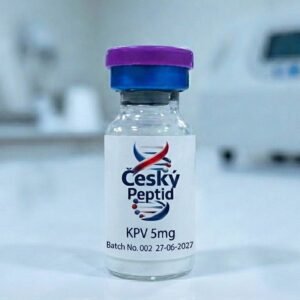
KPV 5 mg

NAD+ 500 mg
Pinealon 10 mg

Selank 5 mg

Semax 5 mg
GHK-Cu 50 mg is intended solely for in vitro research and laboratory use. The information on this page summarises published studies and is not medical advice.

Be the first to review “GHK-Cu 50 mg”