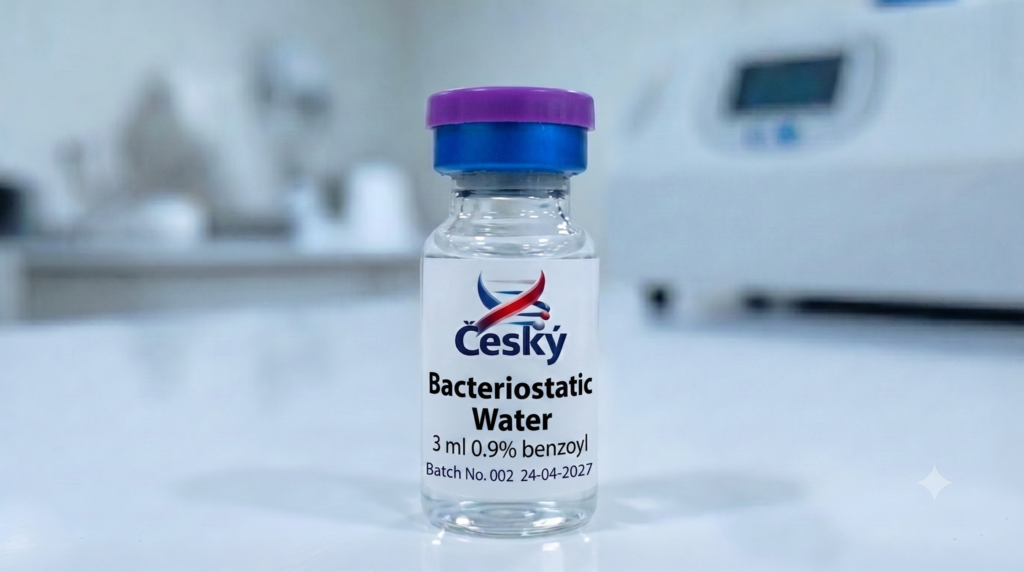
Bacteriostatic water 3 ml
Sterile water with 0.9% benzyl alcohol · solvent for lyophilized peptides
In stock · ships within 24 hWhat it is for
- Dissolving lyophilized peptides
- Prevents bacterial growth
- Repeated draws from one vial
- Lasts up to 2 years unopened
- Content verified by a laboratory
- Volume
- 3 ml
- Preservative
- 0.9% benzyl alc.
- pH
- 4.5–7.0
- Measured
- 8.19 mg/ml
 Z-Box, pick-up point or home delivery
- Ships from the Czech Republic within 24 hours
- Free shipping over CZK 3,000
- Discreet packaging
Description
Bacteriostatic water is sterile, non-pyrogenic water with 0.9% (9 mg/ml) benzyl alcohol as a preservative. The benzyl alcohol stops bacteria from multiplying in an opened vial, so you can draw from a prepared solution repeatedly. Intended solely as a solvent for laboratory work with lyophilized peptides.
Intended use
The solvent is intended for reconstituting lyophilized peptides for research and development. Thanks to the preservative, prepared solutions can have a longer shelf life than solutions in plain sterile water.
Limitations and research notes
- Store the unopened vial at room temperature, away from direct sunlight – it lasts up to 2 years.
- Do not freeze.
- Keep the finished solution with the dissolved peptide in the fridge and use it, usually within 28 days.
- Wipe the stopper with alcohol before every draw.
A lyophilized peptide is a dry powder – before it can be measured, it has to be dissolved. Bacteriostatic water is the most widely used solvent for this: sterile water with 0.9% benzyl alcohol added, which stops bacteria from multiplying in an opened vial. That means you can draw from one vial of solution repeatedly over several weeks.
Bacteriostatic or sterile water?
| Bacteriostatic water | Sterile water | |
|---|---|---|
| Preservative | 0.9% benzyl alcohol | none |
| Repeated draws | yes | no – single use only |
| Shelf life of an unopened vial | up to 2 years | up to 2 years |
| Suitable for | peptides drawn in doses | single-use preparation |
Because peptides are usually drawn in small doses over several weeks, bacteriostatic water is more practical for research. An unopened vial of bacteriostatic water easily lasts 2 years. The 28-day limit applies only to the finished solution – that is, from the moment you dissolve the peptide in the water; keep the solution in the fridge after that.[1]
How much water to add to a vial
The amount of water does not change how much peptide is in the vial – it only changes the concentration. More water means a more dilute solution and a larger volume per draw, which is easier to measure accurately with a pipette. The table above shows the concentration you get for common vial sizes. The most common choice is 3.0 ml, which is exactly one of our vials. The reconstitution calculator works out exact concentrations and volumes in microlitres.
How to dissolve a peptide correctly
- Let both vials warm to room temperature and wipe the stoppers with alcohol.
- Draw the required amount of bacteriostatic water.
- Let the water run slowly down the side of the vial, not directly onto the powder.
- Swirl the vial gently, do not shake – shaking can damage the peptide's structure.
- Keep the finished solution in the fridge at 2–8 °C.
Why benzyl alcohol
Benzyl alcohol is one of the most common preservatives in multi-dose vials. At a concentration of 0.9% it reliably inhibits bacterial growth while being gentle on peptides and not affecting their structure. Reconstituting peptides in bacteriostatic water is therefore standard practice – and for peptides drawn in doses over several weeks, also the safest. Benzyl alcohol should not be used in newborns; in the laboratory it is handled according to the safety data sheet.
Lab-tested bacteriostatic water 3 ml
We had the benzyl alcohol content verified by the independent laboratory Janoshik – 8.19 mg/ml measured against the declared 9 mg/ml (0.9%). You will find the report in the Tests and certificates tab and on the peptide test results page. One 3 ml vial is enough to dissolve one vial of peptide, so we recommend adding it to every order – for example with GHK-Cu or Semax.
Where to buy bacteriostatic water
Bacteriostatic water is not commonly available in Czech pharmacies. You can buy it from us on its own or with one click alongside a peptide in the “Frequently bought together” panel. We ship from the Czech Republic within 24 hours, free over CZK 3,000.
Bacteriostatic water is intended as a laboratory solvent for research. It contains benzyl alcohol, which is not suitable for newborns.
Questions about bacteriostatic water
What is bacteriostatic water?
Sterile water with 0.9% benzyl alcohol added. The preservative prevents bacteria from multiplying in an opened vial, so you can draw from a prepared peptide solution repeatedly.
What is the difference between bacteriostatic and sterile water?
Sterile water has no preservative and is meant for single use. Bacteriostatic water contains benzyl alcohol, which makes it suitable for solutions you draw from gradually over several weeks.
How much bacteriostatic water should I add to a vial?
Usually 1 to 3 ml. The amount of water only changes the concentration, not the peptide content. For a 5 mg vial, 3 ml gives about 1.67 mg/ml and 2 ml gives 2.5 mg/ml.
How long does bacteriostatic water last?
An unopened vial easily lasts 2 years at room temperature – go by the date on the vial. The 28-day limit applies only to the finished solution: once you have dissolved a peptide in the water, keep the solution in the fridge and use it, usually within 28 days.
Where can I buy bacteriostatic water?
It is not commonly sold in Czech pharmacies. You can buy it from us on its own or with a peptide in the Frequently bought together panel, shipped from the Czech Republic within 24 hours.
Is the benzyl alcohol content verified?
Yes, by Janoshik – 8.19 mg/ml measured against the declared 9 mg/ml. The report is in the Tests and certificates tab.
Certificate of analysis (COA)
Independent verification of identity and purity by HPLC. Sample tested:
- Bacteriostatic water 3 ml (#224323)Janoshik Analytical · August 24, 2026Benzyl alcohol measured at 8.19 mg/ml (approx. 0.82 %)Verification: janoshik.com/verify · 5Q1Y2XLHSI8L
Safety data sheet (SDS)
Hazards, handling, storage and disposal of the substance.
Open the safety data sheetMolecular weight
- Water: 18.015 g/mol
- Benzyl alcohol: 108.14 g/mol
CAS number
- Water: 7732-18-5
- Benzyl alcohol: 100-51-6
Molecular formula
- Water: H2O
- Benzyl alcohol: C7H8O
Material data
Appearance
Clear, colourless aqueous solution.
Solubility
Aqueous solution; miscible with water.
Product note: Aqueous laboratory solvent with 0.9% benzyl alcohol as a preservative, pH 4.5–7.0; supplied solely for research and laboratory use.
Peptides in transit
We ship lyophilized peptides in glass vials by standard shipping; they do not need refrigeration. Short temperature fluctuations in transit do not reduce their quality, and the lyophilized form stays stable for several weeks even in summer temperatures.
Storing lyophilized peptides
Store lyophilized peptides in a dry place, protected from light and moisture. We generally recommend these conditions:
- Room temperature (15–25 °C): up to 3 months
- In the fridge (2–8 °C): up to 6 months
- In the freezer (−20 °C and below): 3–5 years (recommended for long-term storage)
After taking the vial out of the fridge or freezer, let it warm to room temperature.
Storing reconstituted peptides
Peptide solutions are generally less stable after reconstitution than the lyophilized form, so keep them cold whenever possible. We generally recommend these conditions:
- Room temperature (15–25 °C): not recommended long term
- In the fridge (2–8 °C): usually 4–8 weeks
- In the freezer (−20 °C and below): up to 3–4 months
To keep the peptide intact, avoid repeated freezing and thawing, which can speed up its degradation.
Important:
Most manufacturers recommend using reconstituted peptides stored at 2–8 °C within 4 weeks. This recommendation is deliberately cautious and may not reflect the actual chemical stability of every peptide. Actual stability depends strongly on the sequence and formulation of the specific peptide, so stick to the recommended period and keep the solution cold and dark.
- DailyMed (U.S. National Library of Medicine). Bacteriostatic Water for Injection, USP – package insert Official US database of medicinal products. Open source ↗
The research overview is based on scientific literature


Customer reviews
Browse more products
Peptides that bacteriostatic water is most often bought with.

DSIP 5 mg
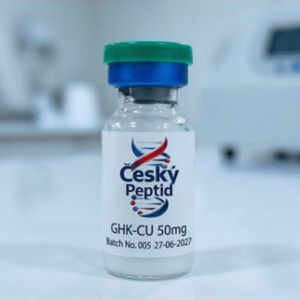
GHK-Cu 50 mg
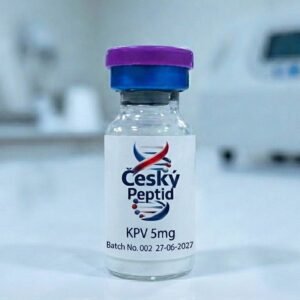
KPV 5 mg

NAD+ 500 mg
Pinealon 10 mg

Selank 5 mg

Semax 5 mg
Bacteriostatic water 3 ml is intended solely for in vitro research and laboratory use. The information on this page summarises published studies and is not medical advice.
Be the first to review “Bacteriostatic water 3 ml”